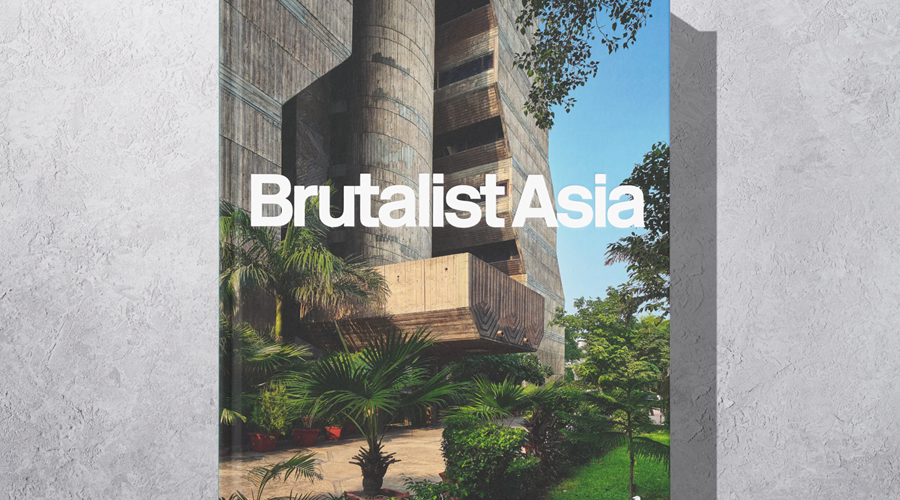
Brutalist Asia, the newest title from Blue Crow Media, is a study in both monumentality and detail: the former in the scope of both its featured structures and the staggering scale of the region, the latter in its focused and nuanced examination of regional architectures. As a survey of concrete constructions across greater Asia (including significant sections on the Middle East and Eastern Russia), it is itself an appropriately heavy 300-plus-page slab, but it wisely backs off of claiming to be comprehensive or all-inclusive. Instead, it takes the approach of letting scholars of regional architecture introduce each section, offering key historical, political, and economic contexts against which the pictured buildings are set.
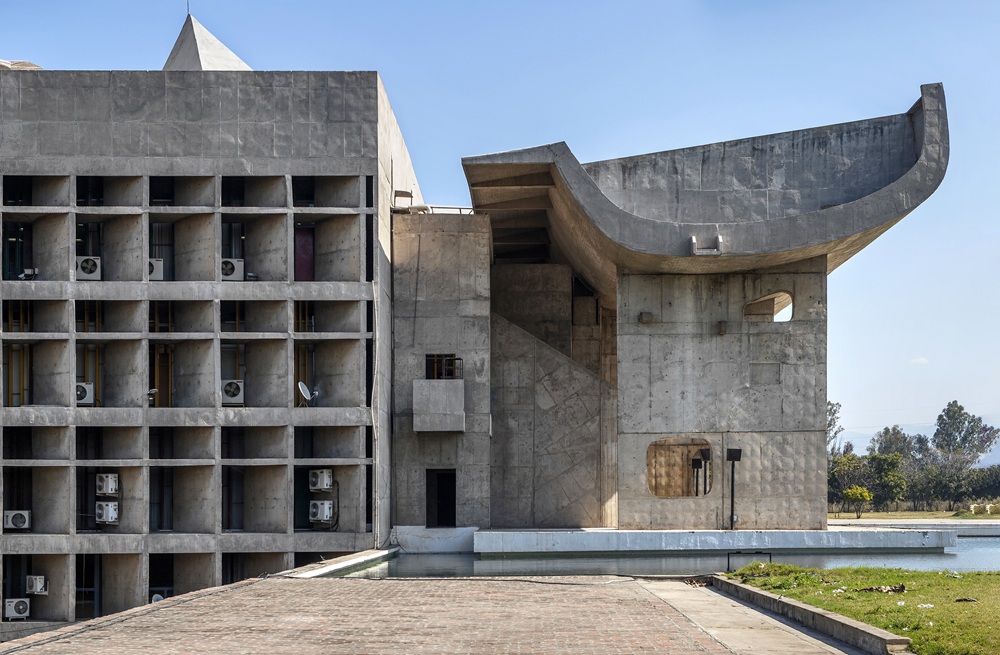
Several of the essays include personal histories of interactions with the featured structures, which provide a welcome human dimension absent from most surveys of this size. Caryn Paredes-Santillan describes her childhood impression of the Tanghalang Pambansa (Theater of Performing Arts) in Manila as it transforms from “a dark mass, suspended against the sky” to a more intimate and human-scaled venue in the transition from exterior to interior:
Inside, everything shifted. The lobby was luminous, light diffused across a high ceiling articulated by curved coffers, with three chandeliers hovering above like suspended points of focus.
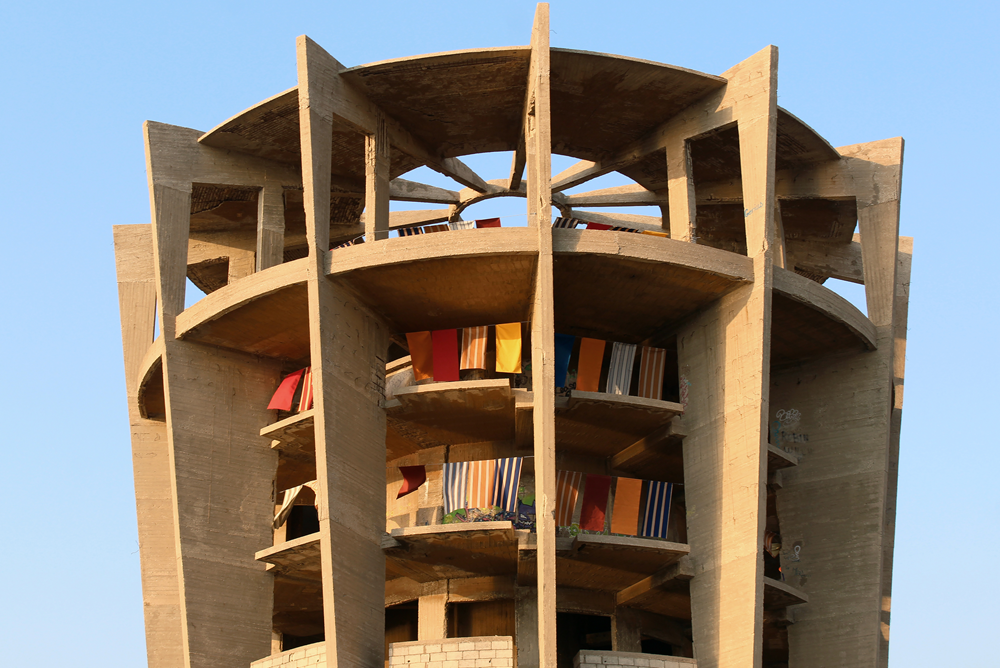
From this focused personal recollection, she expands her discussion to the particularities of Philippine Brutalism, which she argues are rooted in an emerging national identity over the course of the twentieth century, tempered by the more immediate demands of an often harsh tropical climate.
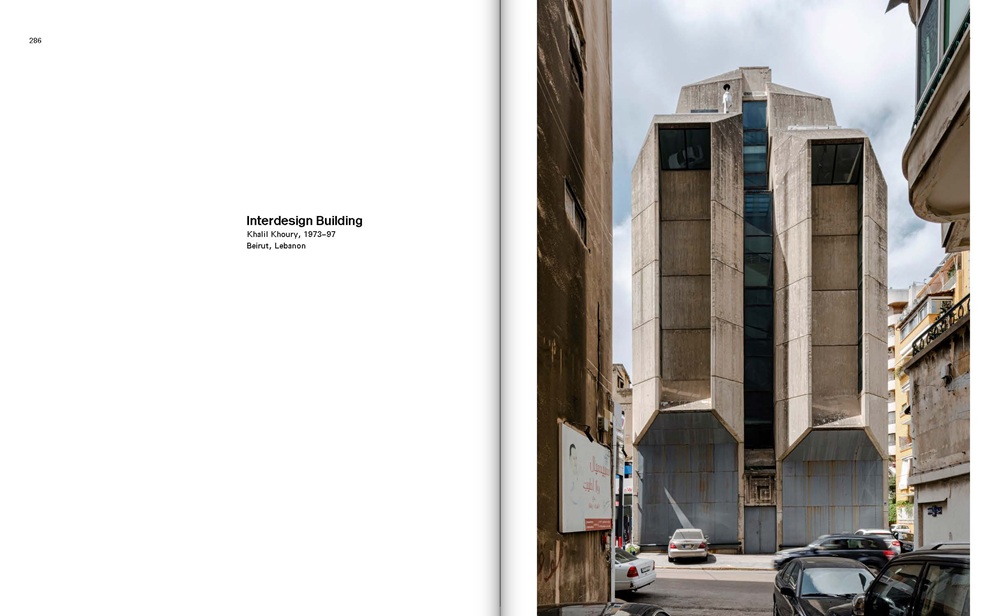
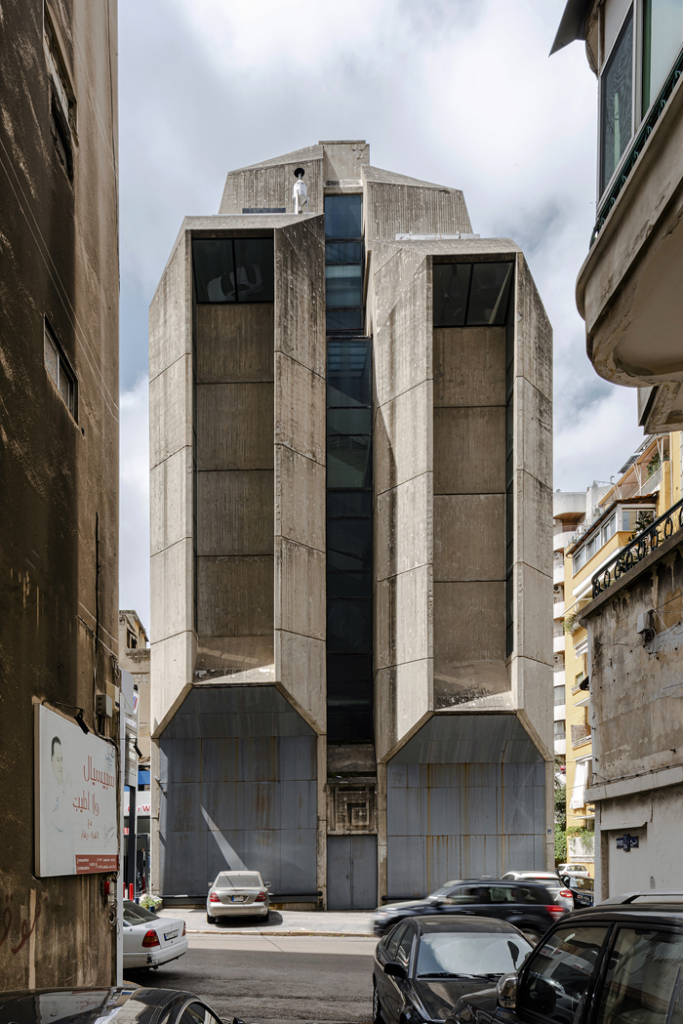
While the theme of Brutalism and Modernist architecture as an expression of national identity is shared among many of the regions featured, the particular ways in which this identity plays out are as varied as the regions themselves. The case of Korean Brutalism is particularly fraught, as the career of star architect and Brutalist icon Kim Swoo-geun was nearly derailed by public backlash against his Buyeo National Museum (1967), which detractors viewed as overly Japanese-influenced—a serious accusation in the sensitivities of the postwar era. In some cases, the forces at play were yet more direct and final: in both Iran and Lebanon, new regimes and civil war respectively caused the immediate cessation of numerous projects, and even those that were completed have been threatened by neglect and demolition in the current century.
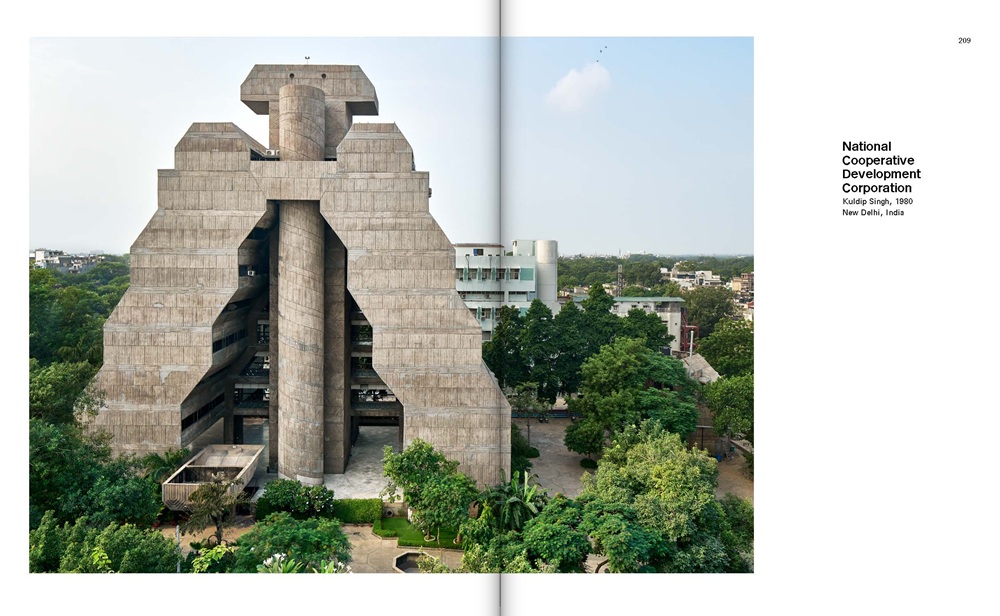
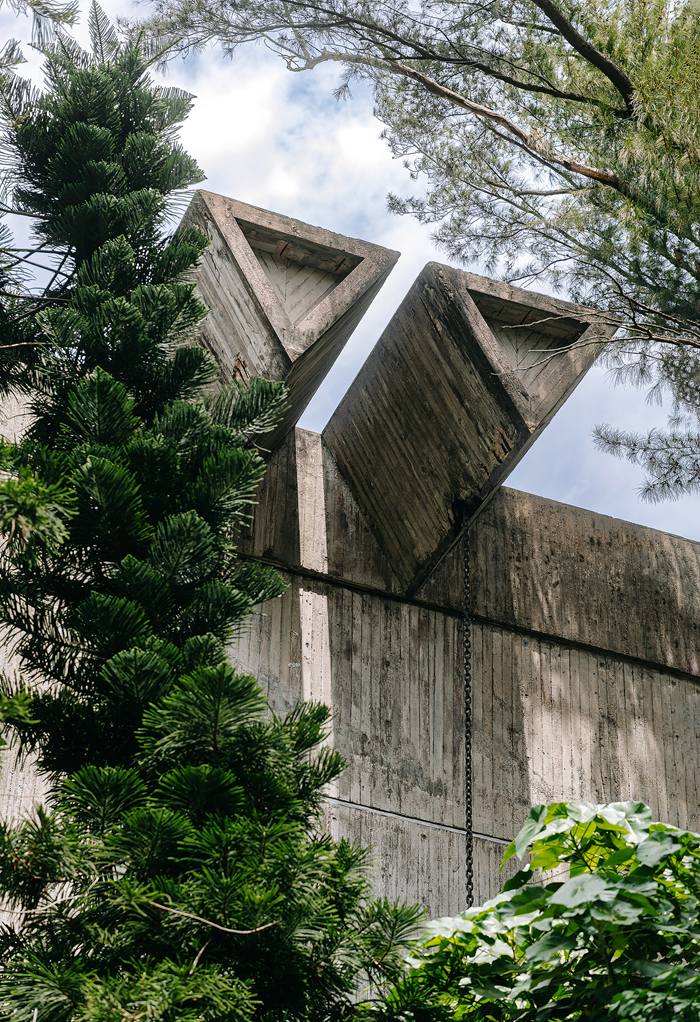
While many of the buildings featured represent the massive, monolithic forms with which Brutalism is often associated, there are numerous examples of lighter and even playful structures on display. These include Takamasa Yoshizaka’s Inter-University Seminar House, with its single watchful eye lodged in an inverted masonic-style pyramid, and the Tagore Memorial Hall in Ahmedabad, where brightly colored faces and wildlife scenes stand out on whitewashed walls. The Tashkent State Circus building, also featured in FUEL’s Brutalist Asia, makes use of Central Asian motifs in structural blocks that are equal parts decorative and load-bearing.
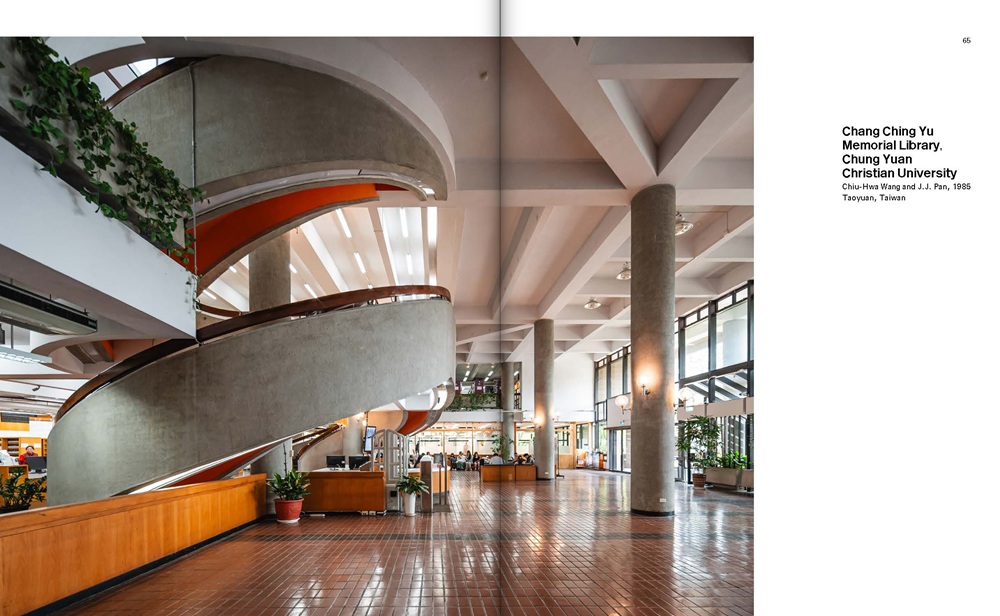
These twinned requirements of any designed building—to address an aesthetic purpose in addition to an immediate functional one—are not unique to Brutalism, but there are few other architectural styles in which it is so foregrounded. As Pinai Sirikiatikul elegantly puts it in his essay on Thai Brutalism, “an authentic concrete building stands as an unforgiving record of its own making.” It’s a beautiful summation of the duality inherent in architecture in general and Brutalism in particular, manifested perfectly in the striking Kasetsart University Physics Building (1969, pictured below).
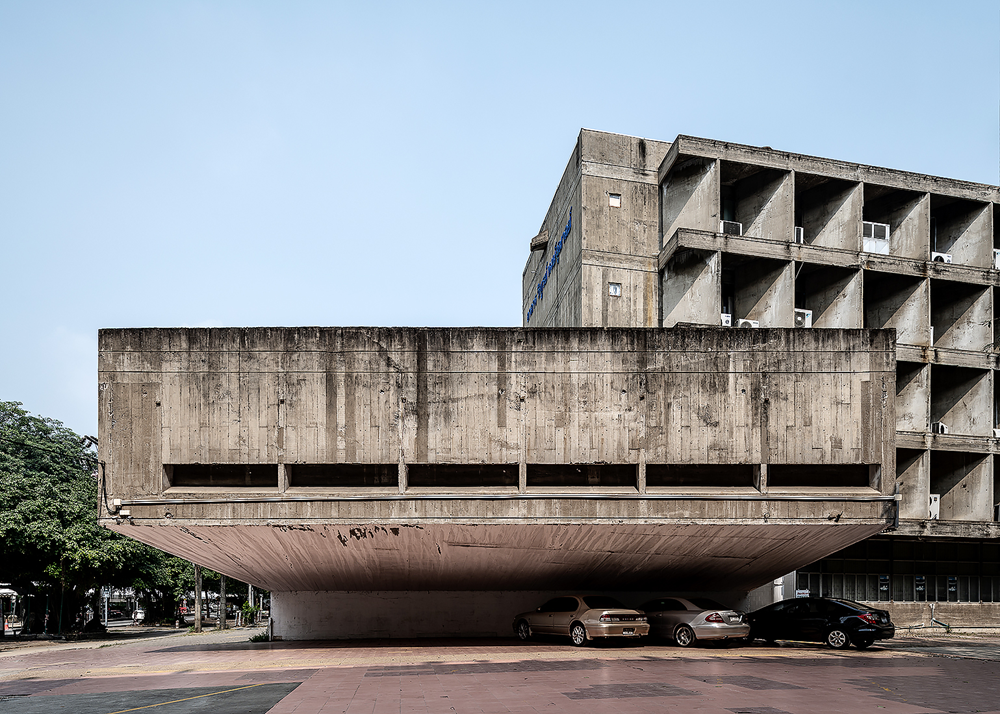
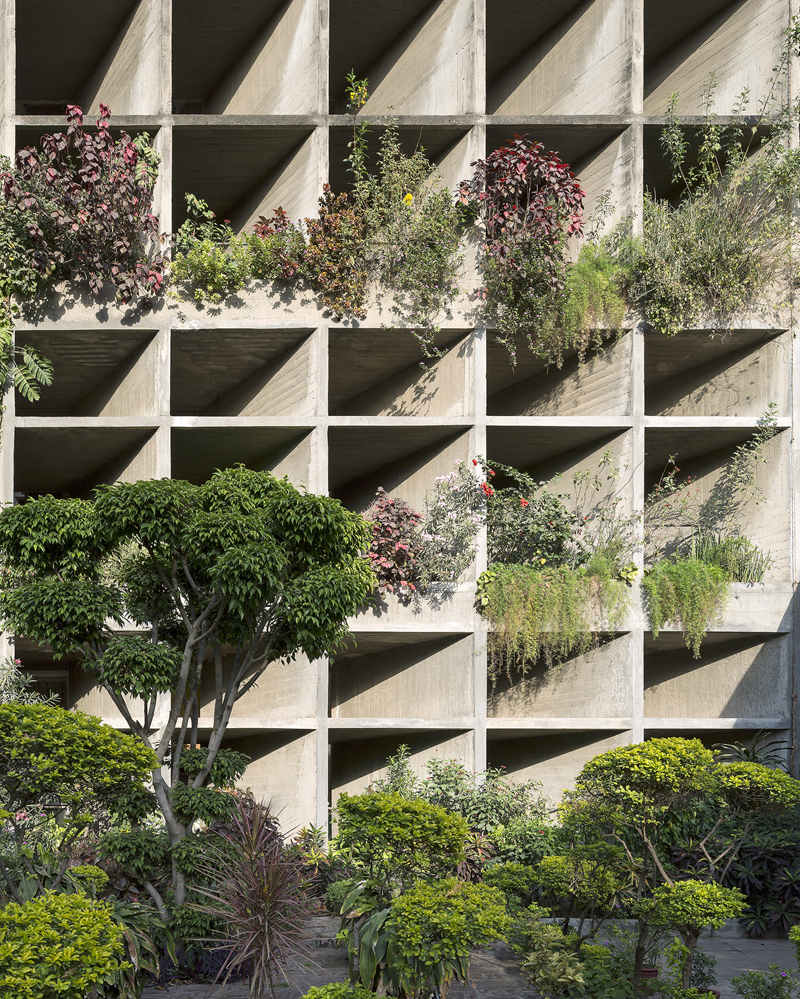
While economic factors and the relative affordability and availability of concrete have always played a large role in the ubiquity of Brutalist architecture, the style can nonetheless convey nuance, artistry, and cultural cache. French-Lebanese architect Jacques Liger-Belair called concrete “liquid stone”, uniting the storied past of stonework with the economic realities of the present.
Brutalist Asia
Edited by Bob Pang and Derek Lamberton
Blue Crow Media
Hardcover, 304 pages, €65.95