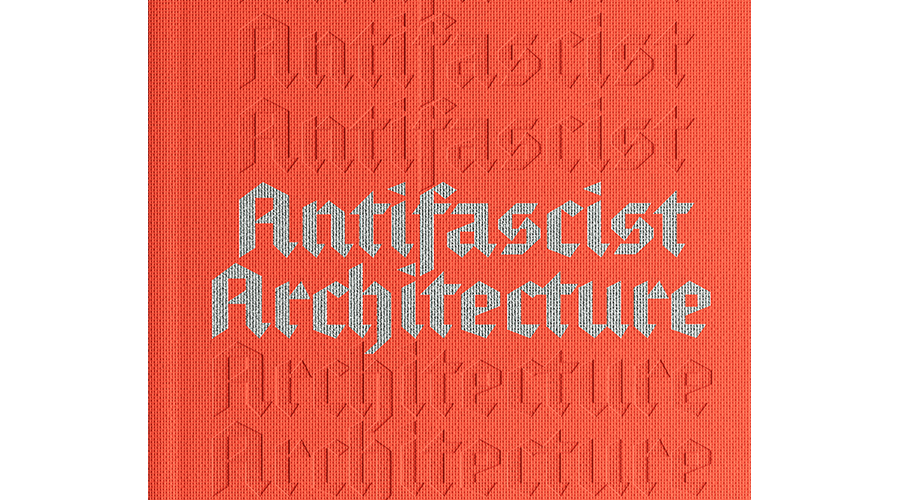
Antifascist Architecture
Andrew Santa Lucia & Daniel Jonas Roche
Illustrated by Lane Rick
Park Books, Hardcover, 256 pages, CHF 39.00
In the opening sections of Antifascist Architecture, the authors examine what they call “The Fascist Architecture Industrial Complex”: an obsession with the built relics of fascist regimes that is found at the highest levels of academic and cultural institutions. The book charts a steady output of monographs, articles, and university courses across the second half of the 20th century that examine these buildings in an almost fetishistic manner, as well as rehabilitative interviews and retrospectives of Nazi-era architects and artists such as Albert Speer and Leni Reifenstahl. Even when examinations of fascist buildings are critical of the politics and figures who made them, the authors argue that it is a rare occasion when the structures of power that made fascist architecture possible is itself critiqued.
From there, the critique moves to the “chameleonism” of postwar architecture, where architects were forced to work in an increasingly broad range of styles and aesthetics in order to remain appealing to the whims of the client. The movements that defined the 20th century—Modernism and the International Style, fascism and Neo-Clacissism, Postmodernism—are all subsumed into the capitalist marketplace of choice, where wealthy clients choose from a list of building styles as easily as they would from a collection of paint samples.
While Antifascist Architecture necessarily begins by examining fascist and capitalist hegemonies, it soon moves into its true project: proposing what the opposite of these things might be, and in particular how the titular “antifascist architecture” might look and behave:
In recent years, myriad books have been written about the merits of antifascism as a panacea to the problems wrought by late capitalism. What makes Antifascist Architecture special, in our opinion, is that is presents a concrete vision of antifascism by asking: What does antifascism look like when it is transmuted into the built world?
With its terms, historical framing, and unapologetically activist stance firmly in place, the book then dives into a wide-ranging and exhilarating survey of architects and architecture from throughout the 20th century. As the authors make clear, antifascist architecture has no single aesthetic; in this, at least, it is similar to fascist architecture, which the book suggests “devoured the full aesthetic spectrum, making it nearly impossible to visually identify as a unified category.”
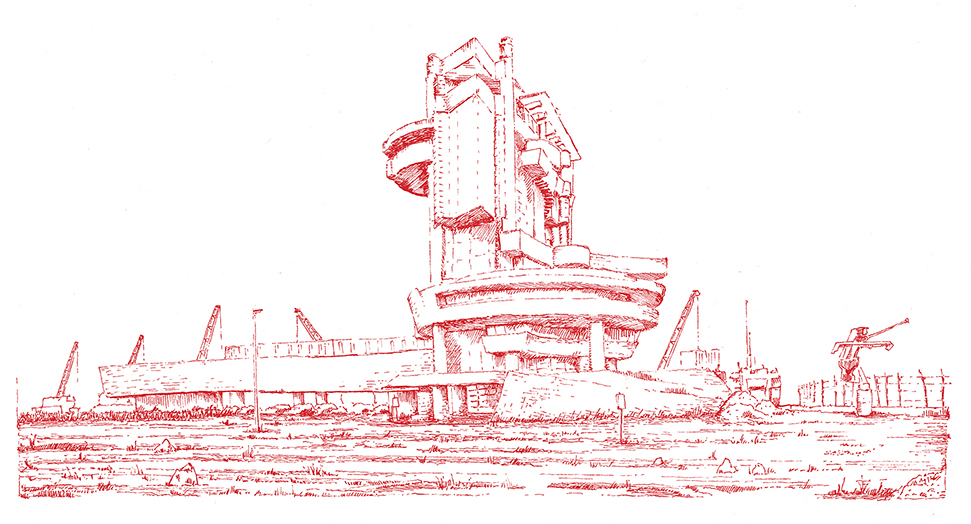
The book features a wildly diverse selection of buildings and built projects that fulfill a range of antifascist, anticapitalist, and community-centered goals, including Casa del Portulale in Naples, punk club ABC No Rio in New York City, and the Rashad Al-Shawa Cultural Center in Gaza City, destroyed by Israeli bombing in 2023. The book also goes beyond structures that no longer exist to include structures that exist only as plans (e.g. the utopian city “Villa Fantome” by Congolese artist Bodys Izek Kingelez), and even structures that were prevented, un-built, such as the “Chalandon Plan” prison project in Paris, which was canceled after threats and attacks on head architect Christian Demonchy and his studio. The book’s mapping of antifascist architectural sites thus includes not only existent structures, but former sites and ruins, and even empty spaces.
Similarly, the architects featured in the book represent the full range of nationalities, backgrounds, and periods of the 20th century and are united more by ethics and inventiveness than by any overarching aesthetic. These include figures as diverse as Abderrahmane Bouchama, the “father of modern Algerian architecture”; Svetlana “Kana” Radevic, the “first” female Montenegrin architect, and Lin Huiyin, “the soul of the Beijing school”. As with many of the buildings discussed, the lives of the architects themselves often have similar trajectories that end in tragedy or obscurity. In the book’s active grouping of these seemingly disparate figures, they gain a new layer of depth and intent, becoming part of a greater project, however posthumously.
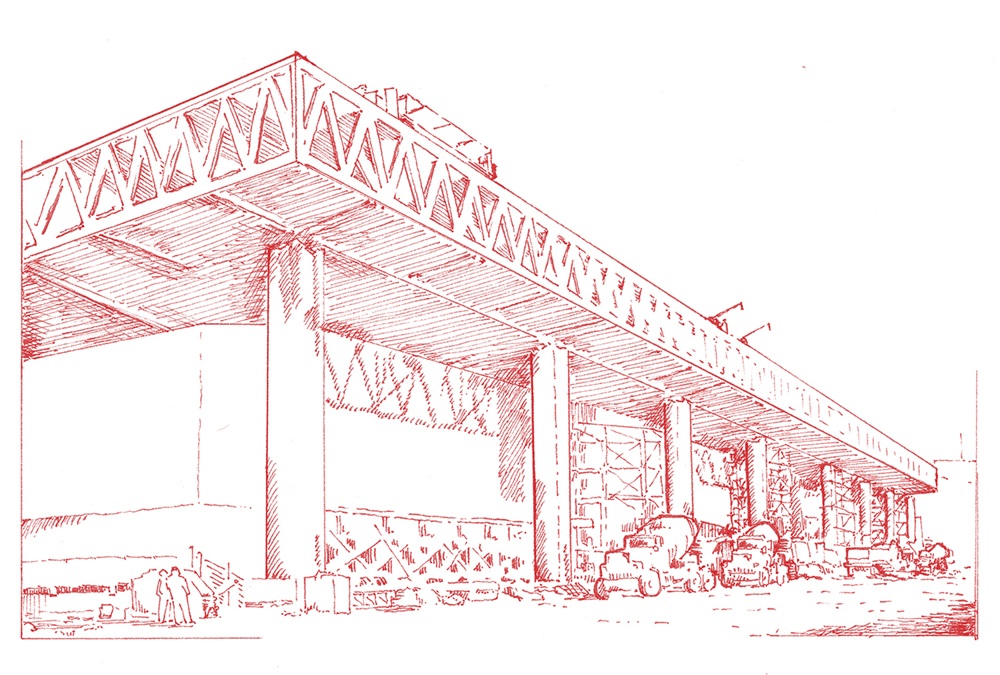
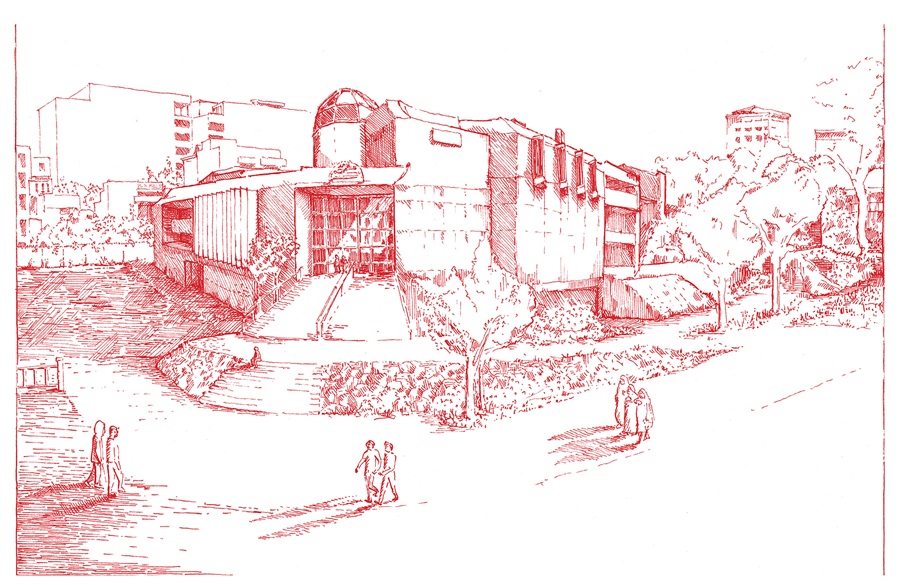
The book makes the unusual and visually striking design decision to forgo photographs entirely, instead using line drawings by artist Lane Rick. The drawings depict buildings, architects, and community spaces in a style that could be described as realist with hints of cartoon-like whimsy, lending them a warmth that contrasts with the cool detatchment of much architectural photography. The severe, autocratic red and black of the chapter headings, which mimic fascist aesthetics, likewise soften into the fine lines and dots of the illustrations. The overall effect is at once pleasing, humanizing, and aesthetically consistent in a way that most architectural surveys are not.